 Amavie
The Greek Epic
@greek_epic
The tenth year after Troy: the gods quarrel, the sea hunts a hero, and the queen of the dead has not gone home.
mythic epic · mythic era · 1174 BC
The Greece of Homer and Hesiod in the tenth year after the fall of Troy. Olympus rises above the clouds, Poseidon's golden palace lies beneath the waves, the dead walk the fields of asphodel beyond the Styx, and between them lie the kingdoms, islands and sanctuaries of the age of heroes. The gods walk among mortals in disguise, the heroes are still alive, and the old stories are happening now.
The story of The Greek Epic
Three brothers divided the world by lot after the war against the Titans: Zeus took the sky and rules gods and men from Olympus, Poseidon took the sea and the earthquakes, Hades took the realm of the dead and all the riches under the earth. Demeter makes the grain grow, Athena guards the cities and the clever, Apollo speaks at Delphi, Hermes carries messages and guides the dead, Hera keeps marriage and watches her husband.
Ten years ago the Greeks burned Troy. The heroes' homecomings went wrong: Agamemnon was murdered in his own bath, Menelaus wandered to Egypt, and Odysseus of Ithaca, who blinded Poseidon's son the Cyclops, is still at sea. Now he has left the nymph Calypso's island on a raft, Athena pleads for him before Zeus, and Poseidon has seen him from the mountains. On Ithaca the suitors eat his house bare and Penelope weaves and unweaves a shroud.
This autumn, for the first time since the bargain of the pomegranate, Persephone did not go down to the underworld at the sowing. She walks the fields of Eleusis to see a winter above ground, and Hades has left his throne to walk the world of the living and ask her — not take her. The asphodels below have stopped flowering.
Places
- The Lands of Hellas and the Great Deep · continent. The rugged world of limestone crags, olive groves, and wine-dark seas carved by the lots of Zeus, Poseidon, and Hades. It is bounded by thunderhead peaks above and the weeping silt of the dead beneath.
- Mount Olympus · region. A sheer mountain crown in Thessaly towering into a cloudless, windless ether where rain never falls. Its bronze-floored halls gleam with eternal dawn, overlooking the smoke rising from mortal altars scattered across the plains below.
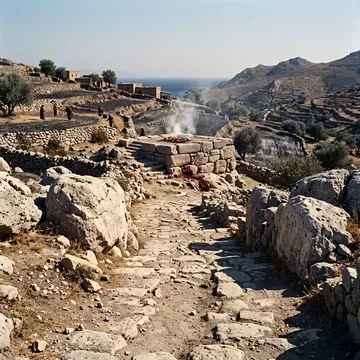
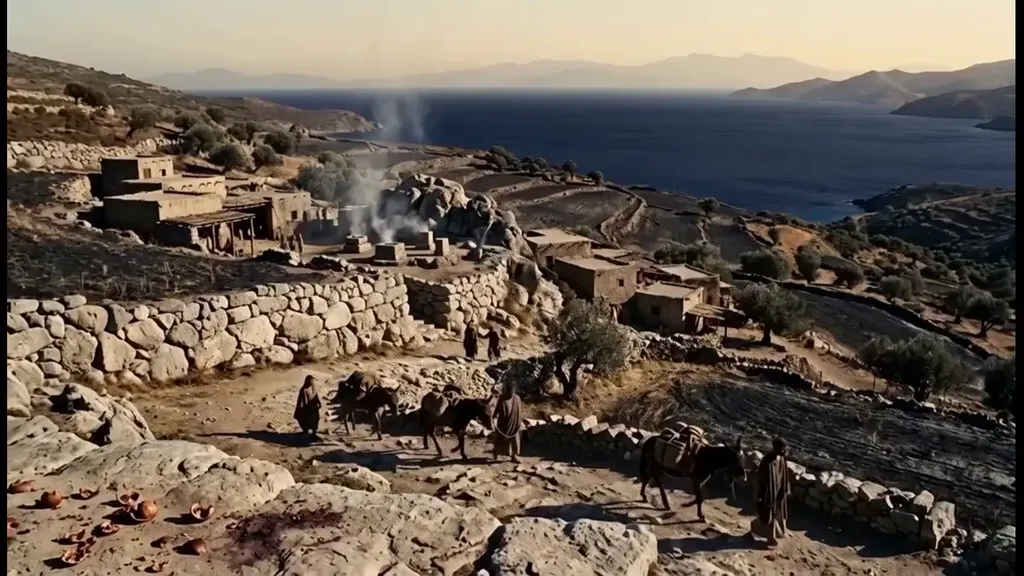
- Attica and the Plain of Eleusis · region. A dry, sun-scoured peninsula of silvery olive trees, pale limestone quarries, and dry winter streams. Along the sacred road from Athens to Eleusis, the barley stalks stand blackened with untimely frost where Persephone lingers in her mortal wool mantle.
- Mount Parnassus and Phocis · region. A savage landscape of dizzying limestone gorges, whistling alpine winds, and deep evergreen forests. High upon its terraced cliffs rests Delphi, where cold spring-waters tumble down ravines and the scent of smoldering laurel hangs over the stone altars.
- The Peloponnese · region. The mountainous heartland of the Achaeans, guarded by the massive Cyclopean lion-gates of Mycenae and the sweeping barley meadows of Sparta. At its southernmost claw, Cape Tainaron plunges into salt spray, concealing a cavern mouth that descends straight to the black rivers of the dead.
- The Ionian Sea and Ithaca · region. A chain of rugged, goat-grazed islands of craggy limestone and stunted scrub oaks rising out of indigo waters. Ithaca sits quiet beneath the shadow of Mount Neriton, its high hall echoing with the drunken laughter of suitors who slaughter the king's swine.
- Scheria, Isle of the Phaeacians · region. A lush, fairy-tale haven far from the shipping lanes of men, bordered by sheer cliffs and twin landlocked harbors crowded with black swift ships. Orchard boughs droop year-round with ripe figs and sweet pomegranates along broad bronze-walled avenues.
Peoples
- Achaean Greeks · Bound by the inviolable law of xenia, Obsessed with kleos (immortal glory) and ancestral lineage, Vigilant interpreters of bird-omens and burnt offerings. The proud, seafaring mortals of the Bronze Age kingdoms who sacked Troy and now reckon with ruined halls and treacherous seas. They dress in homespun linen chitons and heavy wool cloaks fastened with hammered bronze pins, living on coarse barley porridge, dried figs, goat curd, and dark wine cut with spring water.
- Phaeacians · Instinctive navigators of fog and wine-dark waters, Generous hosts who ferry lost wanderers without toll, Devoted to athletics, harp-songs, and graceful dancing. An isolated, aristocratic race of master shipbuilders and rowers dwelling at the rim of the mortal world on Scheria. They wear fine-spun linen dyed with sea-purple murex, dine on pomegranates, sweet pears, and soft wheaten bread, and boast miraculous black ships that steer themselves by thought alone without oarsmen…
- Nymphs and Nereids · Commune directly with wild beasts and crashing waters, Weave garments carrying the scent of sea-spray and pine resin, Bound to the life and purity of their natural sanctuary. Immortal spirits of mountain crags, sweet-water springs, ancient poplars, and ocean surges. They feed on ambrosial vapors, comb raw sea-wool or weave fragrant linen on gold shuttles, and sing laments that can charm wild deer or drive shipwrecked sailors to sweet despair.
- Shades of the Underworld · Insubstantial and unable to touch mortal flesh, Mute and wandering until nourished by sacrificial blood, Trapped in the memory of the wound or age that took them. The fluttering, insubstantial forms of all mortals who have ever ceased to draw breath, drifting across meadows of bone-white asphodel. They possess neither warm blood nor the weight of memory, drifting like smoke until coaxed to speak by the thick, steaming blood of a black ram poured into an earthen trench.
Powers and factions
- The House of the Underworld · Hades, the Unseen King. The grim court governing the dead, anchored by the cold river Styx and the brazen throne of the unseen king. They guard the borders of mortality and ensure that no spirit who has tasted the underworld's bread or soil ever walks the sun again.
- The Olympian Council · Zeus the Thunderer. The quarrelsome family of sky, hearth, and sea whose whims decide the tides of war and the course of mortal ships. They feast on ambrosia, drink nectar from beaten gold goblets, and manipulate kings like counters on a game-board.
- The Suitors of the Hall · Antinous, son of Eupeithes. Over a hundred arrogant young lords from Ithaca, Dulichium, and Same who have occupied the palace of Odysseus, feasting on his prized cattle and carousing with maidservants.
- The Oracle of Delphi · The Pythia, Mouthpiece of Phoebus Apollo. The sacred stone sanctuary clinging to the mist-hung cliffs of Mount Parnassus, centered upon the sacred omphalos stone and the laurel-choked fissure of Apollo. Mortals and disguised gods travel here through rocky passes to sacrifice barley meal and yearling goats, awaiting the cryptic riddles uttered by the Pythia as…
- The Mysteries of Eleusis · Hierophant Eumolpos. The holy keepers of the Telesterion hall who hold the agrarian rites taught by Demeter when she mourned her stolen child. They brew the sacred kykeon drink of barley, water, and sweet pennyroyal, and preserve the secret promises of life after the grave.
History
- The Casting of the Helm · Ages Past. Following the overthrow of the Titan Cronus, the three sons of Rhea draw lots inside a bronze helmet to divide the cosmos: Zeus takes the vault of sky, Poseidon the roaring deeps, and Hades the cold hollow under the earth.
- The Bargain of the Pomegranate · Three Generations Past. Hades carries Persephone down into the darkness; Demeter withers the barley until a compact is struck. Because the maiden tasted six tart pomegranate seeds in the shadows, she must sit on the throne of the dead for six months of each year.
- The Labours of Heracles and the Golden Fleece · One Generation Past. The demigod Heracles drags Cerberus through the cavern mouth of Tainaron and clears the land of primeval monsters, while the Argonauts venture to the rim of the world, marking the high crest of heroic mortal courage.
- The Sacking of Troy · Ten Years Past. After a ten-year siege fought for Helen across the Dardanelles, the black ships of the Achaeans burn high Ilium through the deceit of the wooden horse. The shrines are defiled, earning the wrath of Athena and the scattering of the returning kings.
- The Blinding of Polyphemus · Nine Years Past. Odysseus drives an olive-wood stake into the single eye of the giant shepherd Polyphemus, proclaiming his true name as he flees on his ship. Hearing his son's prayer, Poseidon swears an oath on the deep that the King of Ithaca will lose all companions and find ruin in his hall.
- The Queen Lingers and the Raft Splinters · This Autumn. Persephone refuses to descend down into the dark, leaving the barley fields of Eleusis frozen and Hades walking the upper roads in mortal guise. Across the wine-dark waters, Calypso yields her captive hero to a raft of pine, and Poseidon unleashes a devastating tempest to drown him.