
 Amavie
Velesmire
@velesmire
In Velesmire, the dead come back as seeds.
Slavic folk-horror fairy tale — a fen-forest on the border of the living and the dead · medieval era · year 1186
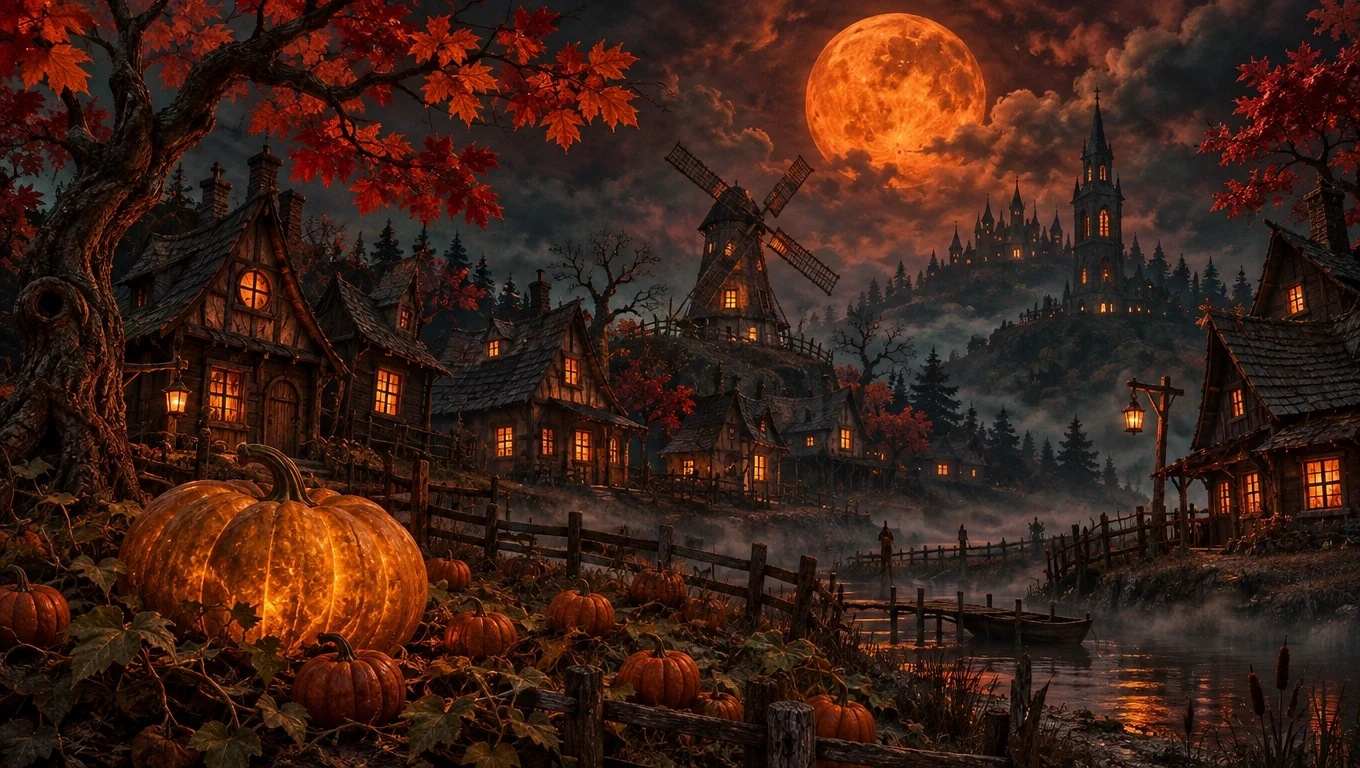
Velesmire is the old fen-forest at the edge of the settled lands, where the living world runs out into black water and willow. The villages on its rim still keep the Pact of the Knock: knock three times before you take anything from the forest, never carry open fire under the canopy, never bring bare iron into the Mire. Beyond the reeds the old spirits live on — willows that remember four hundred winters, burrowers that crawl under the roots, the drowned who sing in the black pools. The fen-folk say the Mire keeps the dead and gives them back as seeds. Somewhere at its heart, in a hidden glade of giant gourds, a tall thing with a pumpkin for a head tends them and waits for them to wake. This autumn the axes have come to the north rim.
The story of Velesmire
Velesmire is named for Veles, the old god of the waters, the herds and the dead, whose house is the bog at the roots of the World Oak. The fen-folk do not say his name over water. In their telling the world has three floors: Prav above, where the bright gods live; Yav, the world of the living; and Nav below and beyond, the country of the dead. Water is the border. Every river that smokes in the cold, every pool too round and too black, is a door, and Velesmire is a forest of doors.
Long ago, when the first families cleared their fields on the south rim, the forest did not let them in. Children drowned, cattle vanished, the fields went to reed. Then an old woman went into the fen alone with a loaf of bread, knocked three times on the oldest oak and waited until the forest fell silent. She came back with the Pact: knock three times before you take anything, and take only if the forest answers with silence; never carry open fire under the canopy; never bring bare iron into the Mire; feed your dead at Forefathers' Eve and do not call them by name over water. While the Pact holds, the forest gives berries, mushrooms, honey and game, and the dead rest easy. The village she founded is Kalinovka. The fen-folk count their years from the First Knock — this is the autumn of 1186.
The Pact has a reason no one says aloud. In Velesmire the dead are not lost. The Mire takes in those who are mourned properly, keeps them in the dark peat, and gives them back as seeds. The herb-wives say every gourd that rings hollow under three knocks carries a sleeping soul, and that one in a hundred years wakes. Nobody in Kalinovka has seen one wake. Everybody in Kalinovka leaves the hollow gourds in the field.
Five winters ago the prince in Gorodets granted the timber of Velesmire to anyone who would cut it. Woodcutters from the river towns built Dubrava on the north rim: a palisade, sawpits, tar kilns and a chapel with an iron bell. They laughed at the knocking. They widened the Old Gat, the log road across the fen, and began to drag oaks out of the Mire. The bell rings at every dusk to drive the unclean out of the trees, and since it was hung the willows of the Drowned Shore have stopped whispering. The drowned of the Singing Pools have not stopped singing; they have only grown hungry.
The fen-folk of both villages tell of the Gourd-Warden: a thing as tall as a door, with a pumpkin for a…
Wi…
Places
- Velesmire · region. The whole fen-forest at the edge of the settled lands: black rivers, willow shores, oak islands in the bog, the Black Mire at its heart, Kalinovka on the south rim and Dubrava on the north.
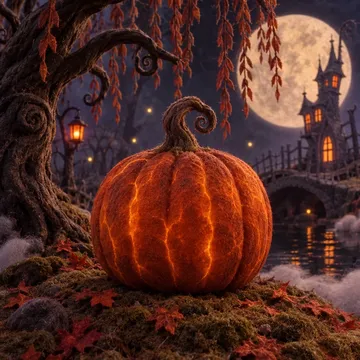
- The Gourd Glade · place. A hidden glade at the heart of the Black Mire: a ring of crooked oaks and black alder over emerald moss, wild gourds as big as boulders and, among them, one colossal golden gourd with veins that glow at night. No path leads there; the fog decides who finds it.
- The Black Mire · region. The quaking bog around the Gourd Glade: moss that sinks under a boot, black eyes of water, dead trees standing up to their knees in peat. In summer the Lantern Bog in its east glows with fireflies; in winter it freezes and can be crossed.
- The Meeting of the Dead Rivers · place. Where two slow black rivers join without a sound: the Navka from the north and the Smorodina, the river that smokes in the cold, from the west. An old bridge of viburnum logs, the Kalinov Bridge, crosses the Smorodina; the fen-folk say it leads further than the other bank.
- The Drowned Shore · place. The far flooded bank of the Black Mire, where old willows stand to their waists in water. The oldest of them, the Bonesetter Willow, shows an old woman's face in her bark when the mist is thick.
- The Singing Pools · place. A string of perfectly round black pools in the alder wood. On still nights the drowned sing in them. Never call a name over them; never lean down to see who is singing.
- The Old Gat · road. A road of half-sunk logs laid across the fen in the time of the First Knock — the only safe way through the Mire. The woodcutters of Dubrava are widening it to drag out oaks.
- Kalinovka · settlement. The old village of the Pact on the south rim: log houses with carved gables, viburnum hedges, a goose meadow sloping to the birches, and gourd-lanterns on every gate at Forefathers' Eve.
Peoples
- Fen-folk of Kalinovka · quiet, superstitious, hospitable to their dead, patient as peat, proud of the Pact. The people of the old villages on the south rim. They knock before they take, leave the hollow gourds in the field, feed their dead at Forefathers' Eve and teach their children never to call a name over water.
- Woodcutters of Dubrava · hard-working, bold by day and afraid by night, scornful of grandmothers' tales, loyal to their band. Newcomers from the river towns who came for the prince's timber. They fell oaks, burn tar and charcoal, ring their iron bell at dusk and laugh at the knocking — most of them.
- Herb-wives · sharp-eyed, sparing with words, unafraid of monsters, bound by their own small pacts. Wise women who live alone on the rims of the fen, between the villages and the forest. They know roots, poisons and remedies, deliver children, wash the dead, and trade with the spirits in silence.
- The Old Trees · slow, ancient, half asleep, endlessly patient and endlessly unforgiving. The willows, oaks and alders that were here before the First Knock. They speak through roots and the hum of sap, remember every fire, and sit in a slow council — the Willow Moot — that takes a winter to decide anything.
- The Drowned · pale, beautiful, hungry, homesick; dangerous to anyone who answers them. The dead of the water who were never mourned properly — rusalki of the Singing Pools and the bog-folk of the deep peat. They sing at night, call names, braid their wet hair in the moonlight and envy the warm.
- The Burrowers · tireless, blind to fear, busy only with peat, water and roots. Earth spirits of the fen — living lumps of sod, roots and worms that loosen the peat, drain floods and carry seeds deep down. Nobody in the villages has seen one clearly.
Powers and factions
- The Pact of the Knock · Elder Malusha of Kalinovka. The old families of Kalinovka who keep the Law of the Knock. Malusha, blind and nearly a hundred, still knocks three times on every door before she enters.
- The Axe Band · Svyatopolk the Woodcutter. The boldest woodcutters of Dubrava, sworn to clear the Mire road for good. Since Svyatopolk came back from the Glade they drink to fire every night.
- The Reeve of Gorodets · Reeve Gleb Tverdislavich. The prince's man who granted the timber of Velesmire, keeps the tally of every oak that leaves the fen and has never once set foot past the palisade.
- The Bell of Dubrava · Brother Pafnuty, the bell-keeper. The small chapel of the new settlers and its iron bell, hung to drive the unclean out of the trees. Its keeper rings it out of fear more than faith.
- The Willow Moot · The Bonesetter Willow. The slow council of the Old Trees, which speaks through roots and takes a winter to decide anything. It has decided to wake the whole forest only once — in the year of the Great Fire.
- The Drowned Court · The Pale Bride. The rusalki of the Singing Pools under their queen. They take whoever answers their singing and whoever eats at their table.
- The Herb-wives · Marena of the Stilt-House. The few wise women of the fen-rims. They serve Kalinovka and Dubrava alike, ask no questions, and keep their small pacts with the spirits.
- The Glade · Tykven, the Gourd-Warden. The hidden heart of the Mire — its Warden, the burrowers who tend its peat and the sleeping gourds. It wants nothing from the villages but the Pact.
History
- The Long Green · Before the First Knock. The fen-forest belongs to the trees and the water. The root of the World Oak comes up in the Black Mire, and Veles keeps his herds of the dead in the peat.
- The First Knock · Year 1. An old woman goes into the fen alone with a loaf, knocks three times on the oldest oak and comes back with the Pact. Kalinovka is founded; the fen-folk count their years from that day.
- The Old Gat · Year 40. The fen-folk lay a road of logs across the Mire with the forest's leave. It is the only safe way through to this day.
- The Great Fire · Year 986. A careless camp fire runs through the north woods for nine days. The Willow Moot wakes the whole forest for the only time: the Mire rises and drowns the fire. The Burnt Edge is its scar.
- The First Sightings · Within living memory. The fen-folk begin to tell of a tall figure with a pumpkin for a head, standing still at the edge of the fog. Lost children start coming home on their own.
- The Herb-wife in the Mire · 1166. Marena the herb-wife falls into the Black Mire and is pulled out by long wooden arms. She has left seeds on a stump at the edge of the bog every season since.
- The Prince's Charter · 1181. The prince in Gorodets grants the timber of Velesmire to settlers. Woodcutters from the river towns found Dubrava on the north rim.
- The Iron Bell · 1183. An iron bell is hung in the chapel of Dubrava and rung at every dusk. On the Drowned Shore the willows stop whispering; in the Singing Pools the drowned grow hungry.