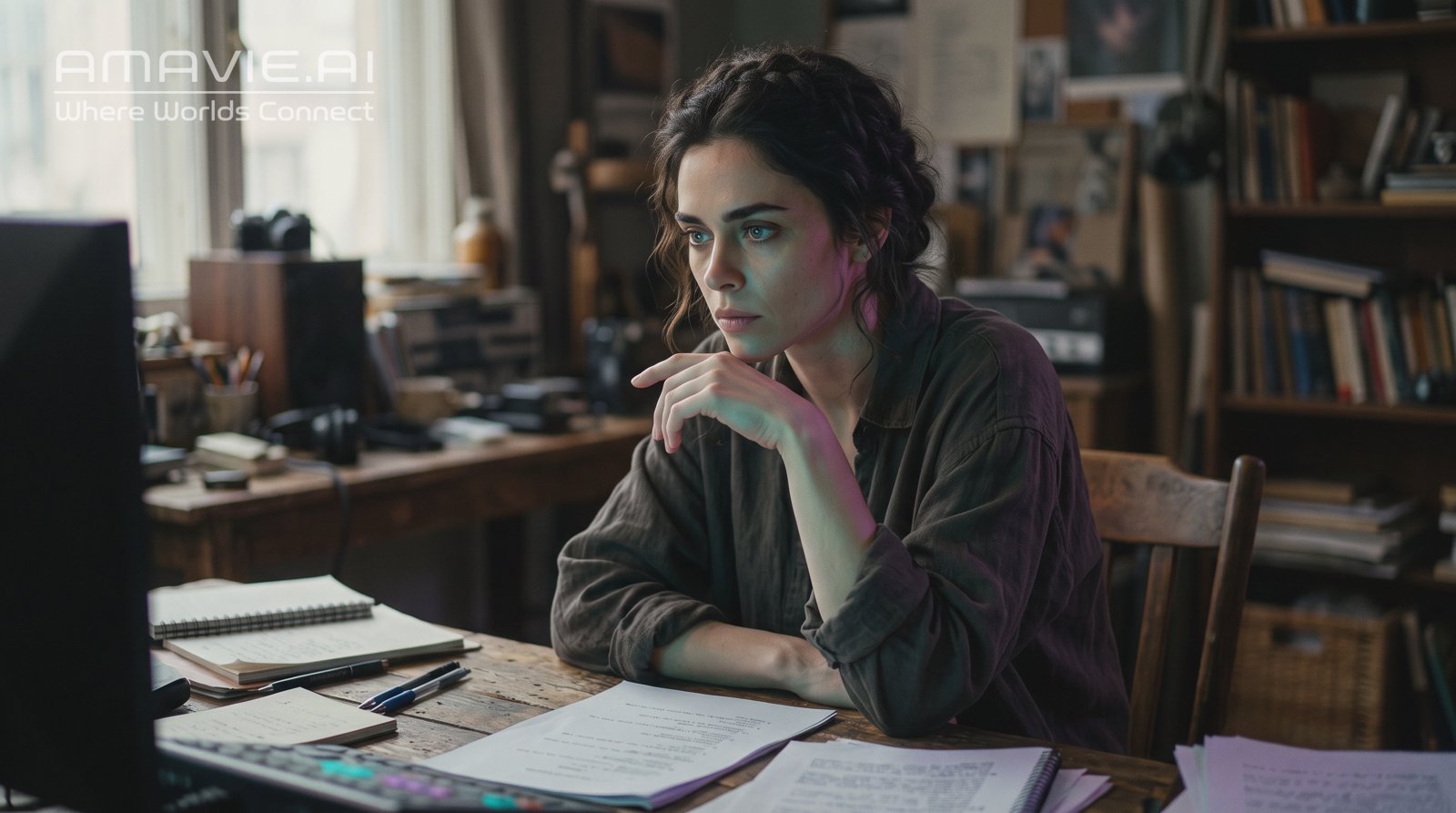
A modern ai story generator should not merely autocomplete your sentences or dump generic blocks of prose onto an empty screen. Real stories breathe through friction, emotion, and unpredictability—elements that emerge only when the cast pushes back against your outline. Instead of treating artificial intelligence as a glorified text predictor, the future of collaborative writing positions you as a showrunner directing conscious, memory-driven actors in an unfolding narrative sandbox.
The death of static generation: Why passive text engines fail
Traditional text engines operate like vending machines: you insert a detailed prompt, turn the crank, and receive three hundred words of polished, yet oddly hollow fiction. These tools generate scenes in an emotional vacuum. They forget why a hero hesitated in chapter two, smooth out eccentric dialogue into corporate-clean prose, and flatten the tension that makes fiction gripping.
When you treat writing as a monologue between a writer and an algorithm, narrative fatigue inevitably sets in. Characters act like pliant cardboard cutouts, agreeing with every plot beat and losing their distinct voice the moment the prompt grows complex.
Dynamic storytelling requires agency. When you direct autonomous personalities rather than static templates, the writing process shifts from solitary drafting to lively improvisational theater. Characters challenge your assumptions, guard their personal secrets, and react based on internal worldviews rather than generic story tropes.
Setting the stage: How to direct living characters
To craft a compelling interactive narrative, you must stop micro-managing line-by-line dialogue and step into the role of a showrunner. Your job is to set the stakes, construct the inciting incident, and let distinct personalities collide naturally within the environment.
Interactive storytelling starts by choosing who enters the room:
- Establish core drives, not just backstories: A character without immediate desire is merely scenery. A rogue hacker like Han So Yeon needs more than technical skills; she needs active friction—a deadline, an unpaid debt, or an obsession with launching Trendme that overrides safety protocols.
- Frame the opening scene: Drop your cast directly into the middle of the conflict. Instead of describing a calm afternoon, frame an escalating problem: an encrypted ledger has been breached, or an uninvited guest has arrived at dawn.
- Let the cast respond organically: Through real-time AI roleplay, step back and watch the reactions. If you challenge an uncompromising enforcer like Officer Blake, expect immediate resistance. He will not concede ground merely to advance your plot; you have to earn his cooperation through persuasion or leverage.
By guiding the scene through high-level directorial notes—introducing a sudden power outage, an unexpected visitor, or a ticking clock—you discover plot twists you never could have planned alone at a blank keyboard.
Maintaining continuity across expansive narrative arcs
The greatest challenge in episodic storytelling has always been continuity. Standard text models suffer from context drift: by scene four, your stoic mentor is cracking slapstick jokes, and the emotional scar established in the prologue has vanished entirely.
True character continuity relies on a persistent architecture:
- Dynamic state tracking: A character must carry the emotional fallout of previous scenes into the next. If an argument turns bitter in an alleyway, that tension must linger when the same characters meet the next morning in a sunlit kitchen.
- Episodic memory: Relationships should evolve rather than reset. Meeting Lina for the third time should feel fundamentally different from your first introduction; her subtle boundaries, history, and guarded warmth build across days and chapters.
- World consistency: Characters must stay grounded within the rules of their specific reality, honoring their philosophical beliefs whether they are navigating corporate high-rises or ancient ruins.
When personality anchors remain stable, you can write twenty chapters without losing the authentic psychological grain of your cast.
From raw scene transcripts to books, comics, and episodic series
A dynamic improvisation session is only the raw material. Once an intense, multi-character scene concludes, the next stage is curating and adapting that narrative spark into finished media.
Transforming dynamic dialogue into polished literature requires structured refinement:
- Pacing and prose cleanup: Live interactions are naturally punchy and spoken. Using a dedicated AI book writer workflow allows you to flesh out atmospheric sensory details, interior monologues, and narrative cadence around the recorded character interactions.
- Visual storyboarding: Because living characters maintain distinct, consistent visual identities, memorable moments within a chapter can be captured as visual stills. A sharp exchange during a late-night negotiation can easily become the visual keyframe for a graphic novel panel or episodic cover art.
- Episodic publishing: Modern stories do not need to sit inside a desk drawer waiting for a 400-page bound manuscript. You can publish your stories as serial drops, episodic graphic stories, or interactive adventures where readers follow the characters' daily lives in real time.
When characters possess autonomous continuity, writing ceases to be an uphill battle against blank pages. The story organically unfolds before you, turning worldbuilding into an exhilarating act of discovery. We are currently opening up our early beta to welcome our first 300 creators—try our AI story generator on Amavie, start your first interactive story, and experience how living AI characters change the creative process.
Frequently asked questions
Is there a free AI story generator?
Yes, Amavie is currently in open beta and lets creators sign up and explore interactive storytelling with living AI characters for free. It is the perfect opportunity to experience autonomous personalities and test collaborative story writing firsthand.
Can AI characters remember the story so far?
Unlike typical stateless chat interfaces, living characters on Amavie maintain persistent state, evolving relationships, and episodic memory across multiple interactions. They remember previous conflicts, private agreements, and shared experiences, allowing your overarching narrative to develop continuous, long-term dramatic tension.
Can I turn an AI story into a book or a comic?
You retain full creative ownership to adapt, edit, and expand any interactive scenes you direct into completed novels, graphic narratives, or serial publications. The dynamic dialogue and character moments generated during sessions provide rich, authentic source material that translates cleanly into traditional fiction or comic script formats.